


Product description
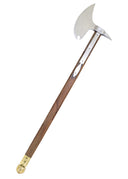
This axe is based on originals from the second half of the 15th century. It features a long shaft, making it ideal for infantry use. The axe is a development of the early medieval Daneaxe (Danish Viking axe). The top of the shaft is reinforced with metal strips (langets) to protect the haft.
Like its predecessors, this type of axe head is curved, making it lighter than a standard woodworking axe. The blade extends into a “beard” at the back and a point at the front. The point could be used for thrusting, while the beard allowed cavalrymen to be pulled from their horses. The secondary point on the opposite side of the battle axe emerged in the second half of the 15th century as a response to increasingly effective plate armor worn by mounted knights.
The point could be used to thrust through gaps in plate armor, or combined with the reach and leverage of the long axe, to cleave through armor. The back of the axe features a decorative brass knob, which could also serve as a weapon in emergencies. Axes like this remained in use on Renaissance European battlefields until the late 16th century.
This replica represents a 16th-century design. The end of the shaft is finished with brass fittings. The axe measures 127 cm in length with a 29 cm long blade and weighs approximately 2.4 kg.


