


Product description
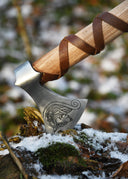
This type of axe blade is classified as a Petersen Type G. The neck is slender and often features flat sides, while the back is relatively thin. The blade is symmetrical and more curved than Type A. This type of axe was likely developed for warfare and was used from approximately 800 to 950 AD.
The axe was an indispensable and versatile tool for the Vikings, whether it was used to fell trees, build ships, houses, and furniture, or as a weapon in combat. The shape and size of the axe heads were adapted to their intended purpose. Some axes were beautifully decorated and served as status symbols, often buried alongside their owner. Today, Viking axes are highly prized collectibles and frequently appear in films, TV series, and video games, shaping the image of the fierce and fearless Vikings. This Viking axe features a hand-forged blade made of high-quality carbon steel and a sturdy ash wood handle. The axe head is further decorated with engravings of a historical Viking motif and the axe is wrapped in leather. It makes an excellent gift or addition to a Viking outfit!
Dragons were the mythical variant of snakes and appear in the earliest myths of modern humans. As humans spread across the world, dragon mythology spread as well. Among many Indo-European peoples, dragons play a prominent role in their mythologies. In Germanic and later Viking mythology, dragons are seen as all-destroying monsters. At the same time, they symbolize the evil beast that must be defeated by a hero. These two archetypes—the destroyer and the adversary of the hero—reinforce each other.
In Indo-European cultures, the wolf held a dual meaning. The animal was a dangerous enemy but also commanded respect for its cunning, strength, and ferocity. This relationship gave rise to rituals in which the wolf played a central role. The koryos ritual is an important expression of this wolf cult. From this emerged the Germanic Ulfheðnar—warriors who revered Odin (Wodan) and were known as the “wolves of Odin.” In Germanic and Old Norse art, wolves symbolized loyalty, protection, aggression, and strategic insight.


