


Product description
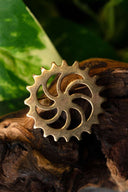
This fibula is a replica of a Roman find and is perfect for reenactment by Romans, Celts, and Germanic peoples. The sun wheel motif has deep roots in European prehistory and symbolizes the sun, light, and cyclical time. Although the motif was already used in the Bronze Age, it gained remarkable popularity and development during the Roman period, when it was often integrated into architecture, mosaics, and decorative objects.
In the Roman period, the sun wheel was frequently associated with Sol Invictus, the unconquered sun god, who played an important role in both the religious and symbolic world of the Roman Empire. The motif typically consisted of a circular composition with rays or spokes representing the sun or its movement across the sky. The sun wheel was often combined with other motifs, such as laurel wreaths or mythical figures, to express divine protection and power.
Archaeological finds of the sun wheel motif appear in a wide range of contexts. It has been found on Roman fibulae (brooches), coins, and military standards, where it symbolized the continuity and strength of the Roman Empire. Additionally, it was used in mosaics and wall decorations in villas and baths, often in combination with symbols of abundance and prosperity. In some cases, the sun wheel also appeared in funerary art, such as on tombstones, where it symbolized a new beginning or eternal life.


