
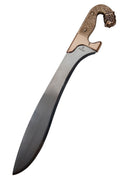

Product description
The falcata is a type of steel sword that originated in Iberia, linked to the indigenous Iberian populations before the Roman conquest. It was commonly used by the Iberians and neighboring groups like the Celtiberians, becoming one of the most prevalent swords in the Iberian Peninsula.Roman historians admired the quality of the iron used in the creation of Iberian weapons. They were particularly impressed by the falcata's exceptional cutting ability and flexibility, which were highly valued in weapon manufacturing at the time.
Interestingly, after the first battles in the Iberian Peninsula, Roman forces were ordered to reinforce the edges of their shields with iron. This was likely due to the falcata's cutting power, which was far superior to that of straight swords or sabers.
Product details
Product details:
Zamak handle finished in bronze with grip in ivory imitation, 420 stainless steel blade, 48-52 HRC.
Overall length: 60 cm
Blade Length: 56 cm
Weight: 1.5 kg
Edge: semi-sharp (0,8 mm) (decorative use only)
Based on a historical original
Shipment weight (g): 2000


